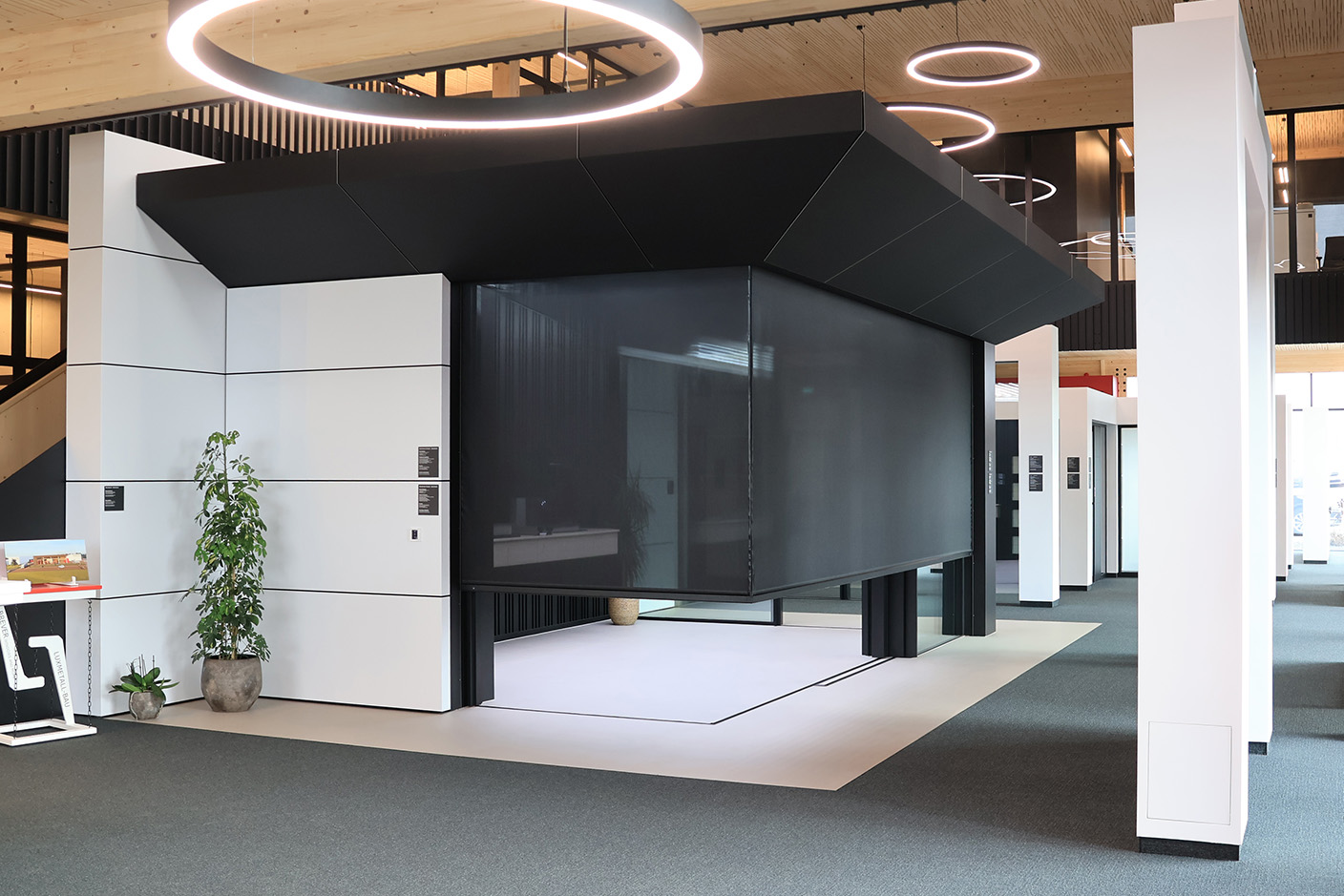
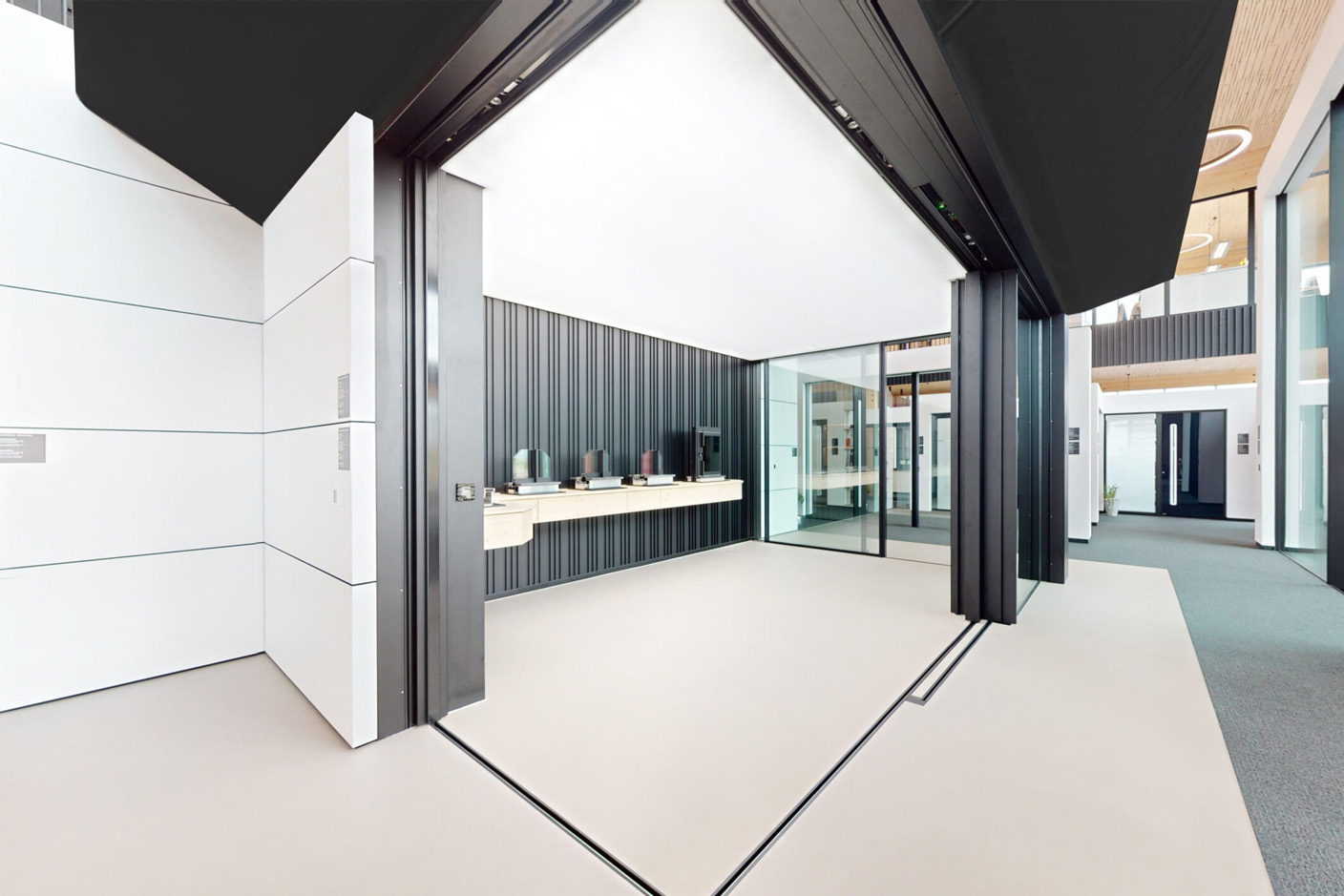
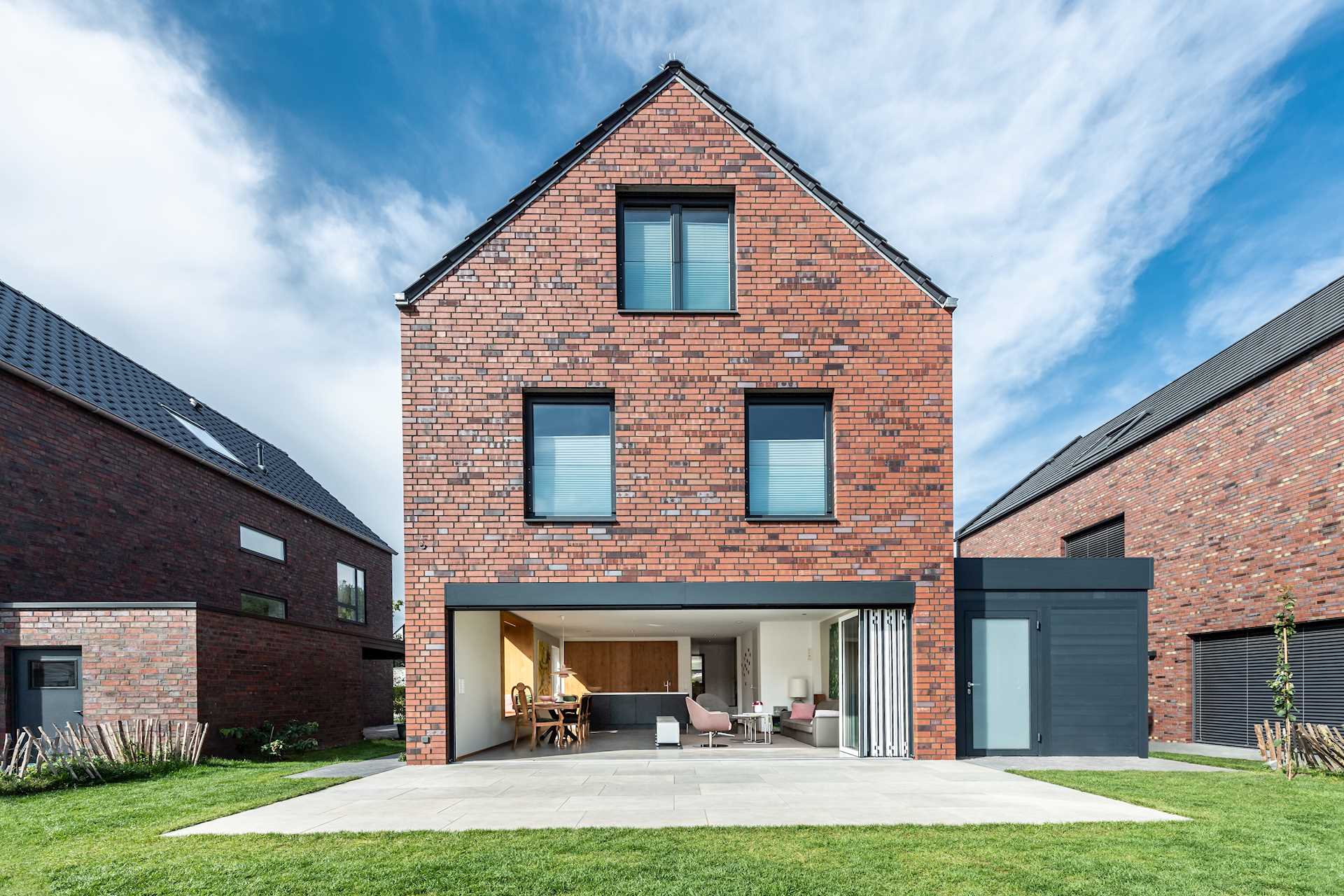
Descending windows enable an elegant, vertical opening and create flowing transitions between the interior and exterior.
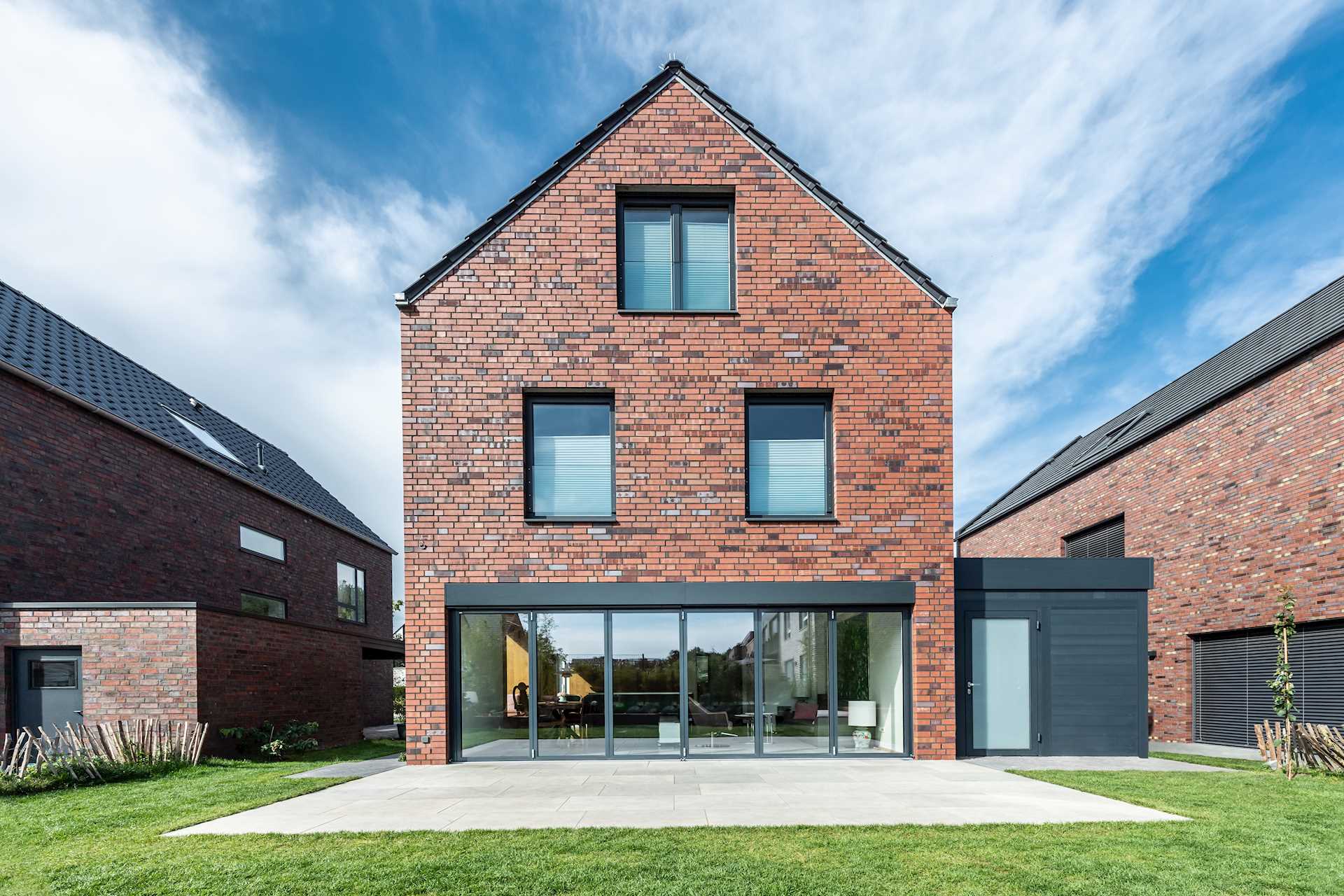
The special feature of bi-folding glass doors lies in the large-scale opening of rooms and façades. The zig-zag structures of the window wall elements can be folded to the side to form a narrow set of panels and thus open to almost 100%, while offering maximum protection when closed. The generous glass front is transformed into a flowing opening. Exterior and interior merge together as the user wishes.
Functionality, design wishes thanks to high-quality materials and limitless combinations make the bi-folding wall ideal for use in new builds and renovations.
Functional principle & applications
Bi-folding glass walls offer what classic sliding windows cannot: large glass fronts that can be opened almost 100% and offer maximum protection when closed. This is because, unlike the classic sliding door, the individual elements of the bi-folding wall can be folded completely to the side to form a small package.
The ability to remove limits and flexibly combine the inside and outside makes bi-folding glass wall suitable for use in all types of buildings. From private residential buildings and urban apartment blocks to gastronomy use and sports facilities: All uses benefit from the freer design of the transition area or the flexible organisation of rooms in the inside living area.
Break down the wall!
Discover the better alternative to sliding door glazing! Our multi-part folding glass wall offers maximum flexibility for the transition between living space and patio. Forget limited openings – the glass elements can be folded completely to the side. A practical access panel makes it easy to enter and exit. This allows you to connect indoor and outdoor areas seamlessly and barrier-free. You can see another impressive variant in the video. There is no greater opening option! The bi-folding wall is the best alternative to the sliding door.
The multi-part folding glass wall allows the room to be opened flexibly – it is not only completely open or closed, but can also be customised as required.
{
“@context”: “https://schema.org”,
“@type”: “FAQPage”,
“mainEntity”: [
{
“@type”: “Question”,
“name”: “Was ist der Unterschied zwischen einer Glas-Faltwand und einer Schiebetür?”,
“acceptedAnswer”: {
“@type”: “Answer”,
“text”: “Eine Glas-Faltwand lässt sich nahezu vollständig öffnen, da die Elemente seitlich gefaltet werden. Schiebetüren blockieren immer einen Teil der Öffnung.”
}
},
{
“@type”: “Question”,
“name”: “Wie energieeffizient sind die Glas-Faltwände?”,
“acceptedAnswer”: {
“@type”: “Answer”,
“text”: “Dank thermisch getrennter Rahmen erreichen manche Modelle Uw-Werte bis zu 0,8 W/m²K – ideal für Passivhäuser.”
}
},
{
“@type”: “Question”,
“name”: “Sind die Glas-Faltwände einbruchssicher?”,
“acceptedAnswer”: {
“@type”: “Answer”,
“text”: “Viele Modelle sind nach RC2 oder RC3 zertifiziert und bieten damit hohen Einbruchschutz durch Sicherheitsglas und stabile Profile.”
}
},
{
“@type”: “Question”,
“name”: “Kann die Glas-Faltwand auch in Aluminium oder Holz gefertigt werden?”,
“acceptedAnswer”: {
“@type”: “Answer”,
“text”: “Ja, Brever bietet sowohl Aluminium-Ausführungen als auch Varianten mit innenliegender Holzverblendung an.”
}
},
{
“@type”: “Question”,
“name”: “Können Glas-Faltwände auch nachträglich eingebaut werden?”,
“acceptedAnswer”: {
“@type”: “Answer”,
“text”: “Ja, Brever bietet individuelle Lösungen für die Nachrüstung – ideal für Sanierungsprojekte und Umbauten.”
}
}
]
}
Descending windows enable an elegant, vertical opening and create flowing transitions between the interior and exterior.